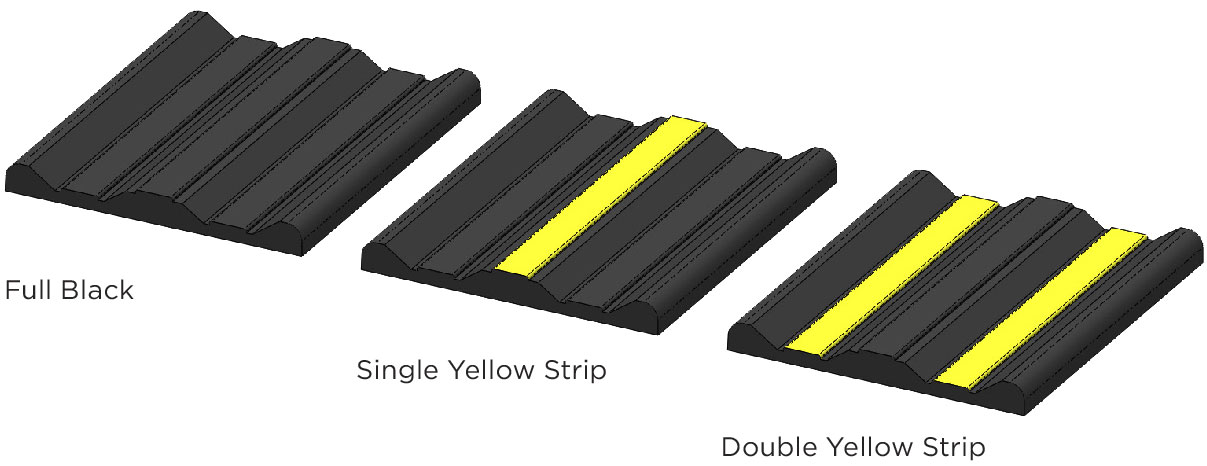
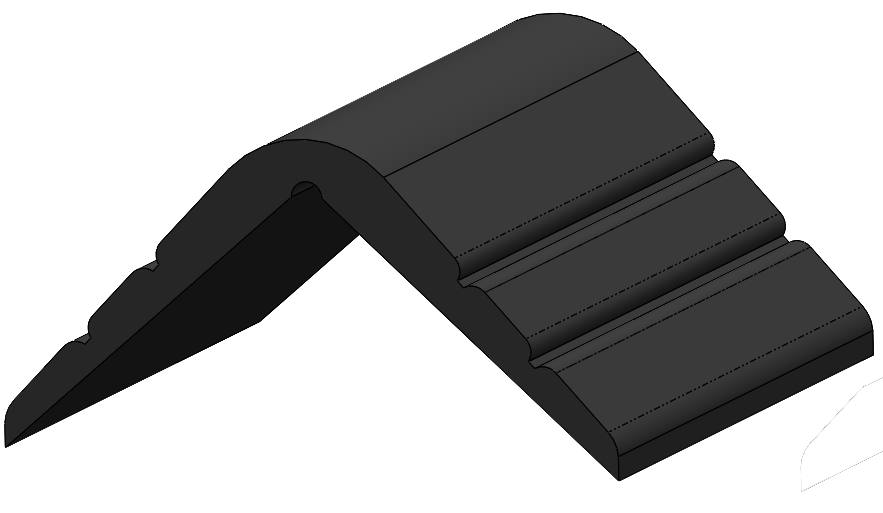
Wheel chocks are used for safety and accident prevention. Chocking, also known as blocking, is done to prevent trucks, airplanes and trailers from unintentionally moving, like rolling or overturning, while workers are loading, unloading, hitching, unhitching or servicing the vehicle.
PU Wheel Chocks
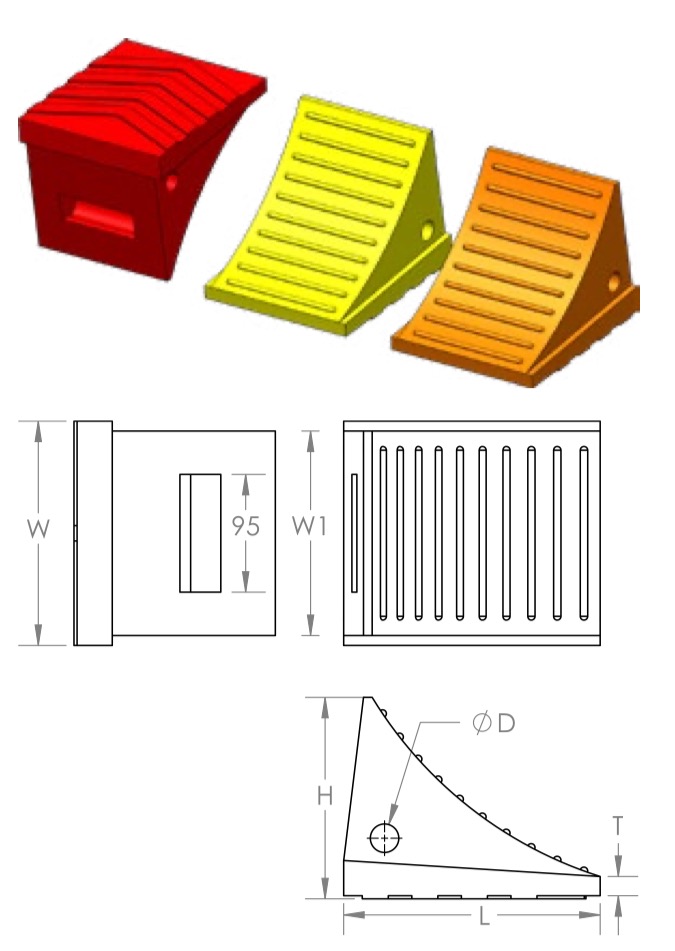
| Code | L (mm) | T (mm) | D (mm) | H (mm) | W (mm) | W1 (mm) |
|---|
| PUWC01 | 205 | 15.5 | 23 | 160 | 180 | 165 |
| PUWC02 | 280 | 16.5 | 33 | 210 | 220 | 200 |
Rubber Wheel Chock Type A
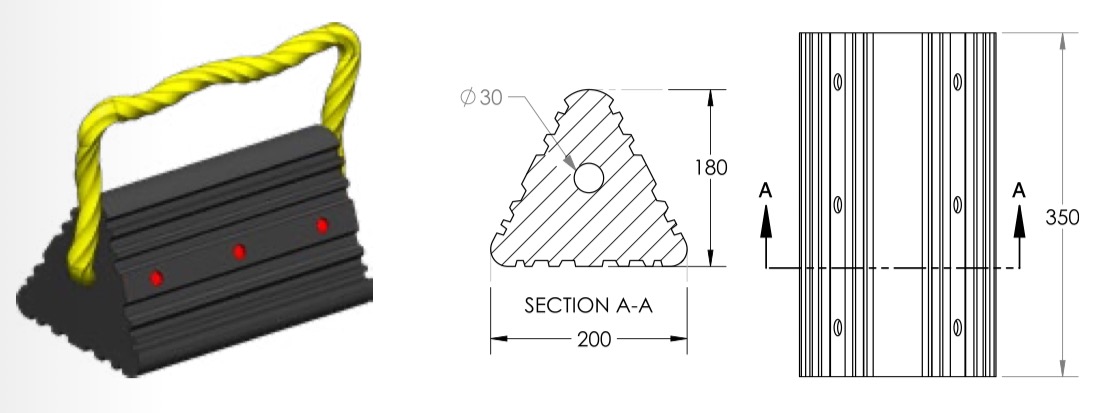
Rubber Wheel Chock Type B
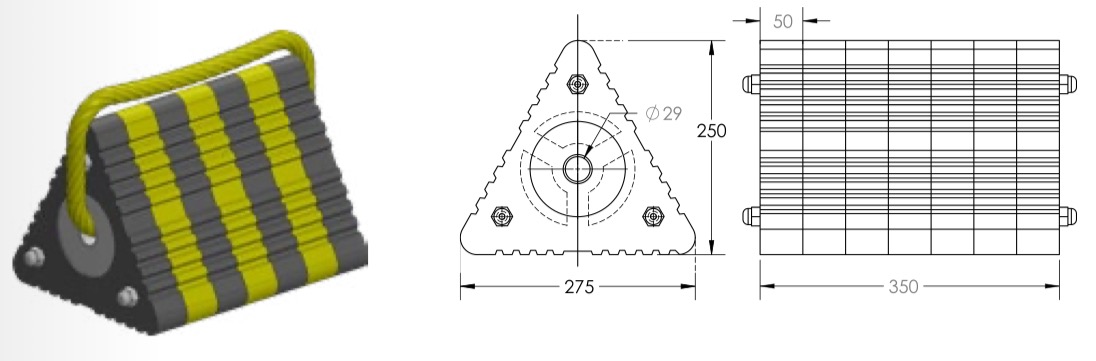
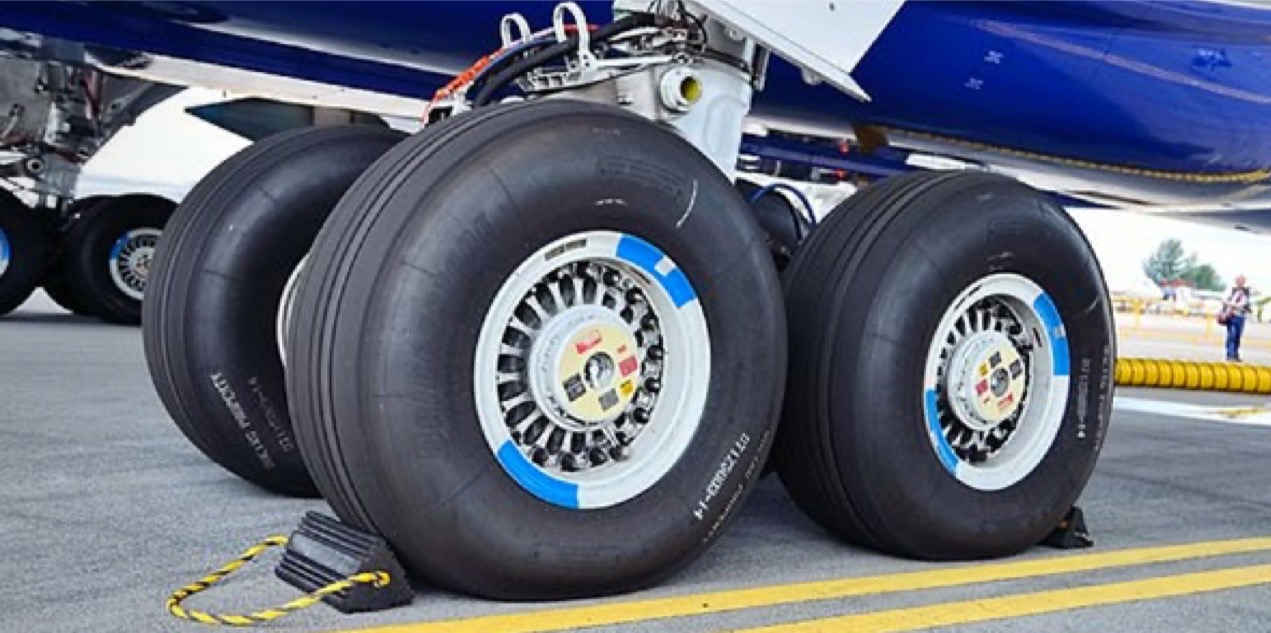
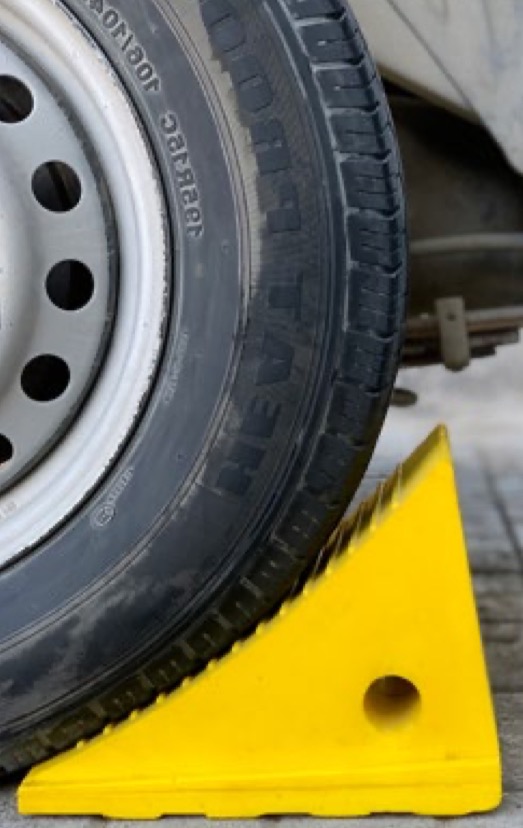
Wheel Chocks: Preventing Uncontrolled Vehicle Movement at Loading Docks and Beyond
An unsecured vehicle at a loading dock is a serious safety hazard. If a trailer creeps forward during unloading, the gap between vehicle and dock can widen suddenly, causing falls, crush injuries, or load drops. Wheel chocks are a simple, proven device that prevents this by physically blocking the wheel from rolling.
What Are Wheel Chocks?
A wheel chock is a wedge-shaped block placed against one or more tyres to prevent a vehicle from moving. Wheel chocks are manufactured in rubber, polyurethane, aluminium, and heavy-duty polymer, in sizes from small car wheel chocks to large aviation-grade units. Rubber wheel chocks are the most common in commercial and industrial use, valued for their grip, durability, and resistance to oils and chemicals. Caravan wheel chocks are a popular consumer variant for touring and static caravans.
Applications
Warehouse and operations managers are the primary commercial buyers, using wheel chocks at every active loading dock as directed by HSE guidance document L117 on workplace transport safety. Haulage operators carry them on every vehicle. Maintenance buyers reorder them regularly as a consumable safety item. Car wheel chocks are also widely used in automotive workshops and vehicle storage facilities.
Key Benefits
Wheel chocks provide immediate, no-cost-to-operate vehicle restraint. They require no power, no infrastructure, and no maintenance beyond periodic inspection. They complement more complex dock restraint systems and satisfy regulatory expectations at minimal cost.
Buying Considerations
Match the chock size to the tyre diameter and vehicle weight: undersized chocks can be overridden. Rubber wheel chocks are preferred for wet and oily surfaces due to their superior grip. Check whether the product meets relevant standards such as DIN 76051 for an additional quality assurance layer. Consider purchasing with a rope or handle for easy placement and retrieval. For loading dock environments, buy in pairs and establish a documented chocking procedure as part of your workplace transport risk assessment.