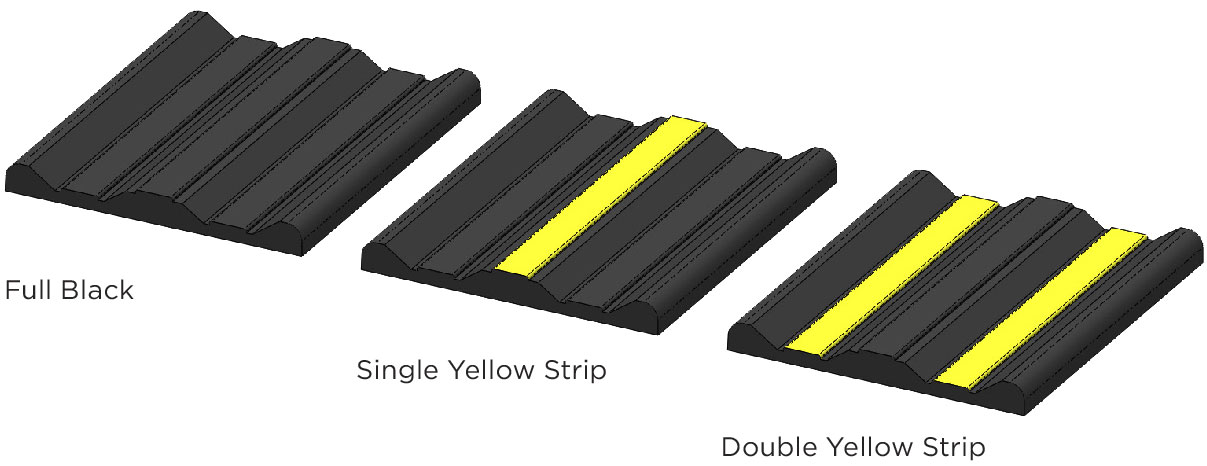
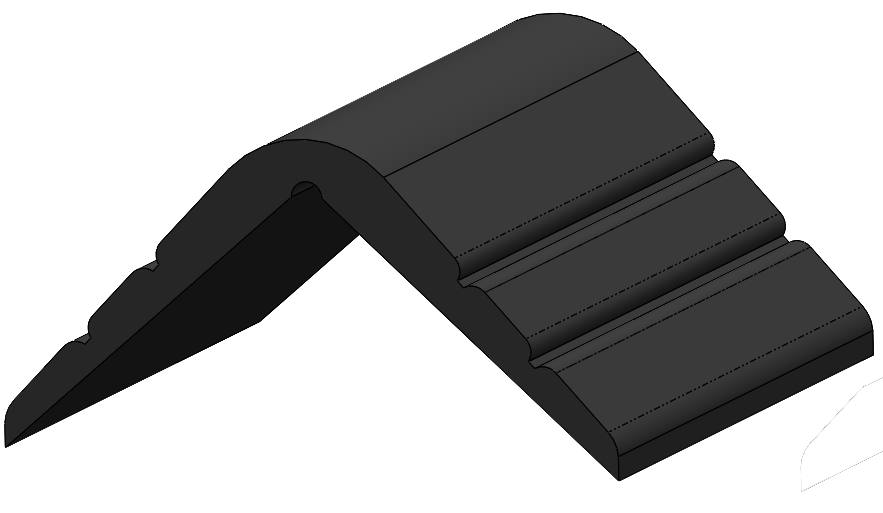
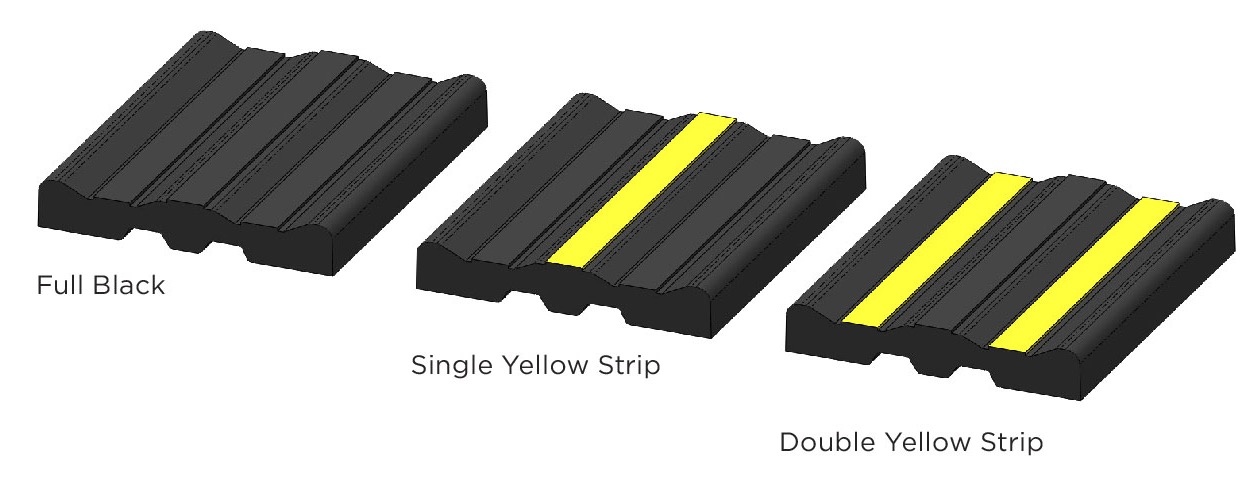
A range of solid rubber wall guards designed to be easily and securely fixed to walls. The guards can wrap around steel or concrete bollards, absorbing impact and reduce damage to property. The guard is supplied in a large range of thicknesses and widths.
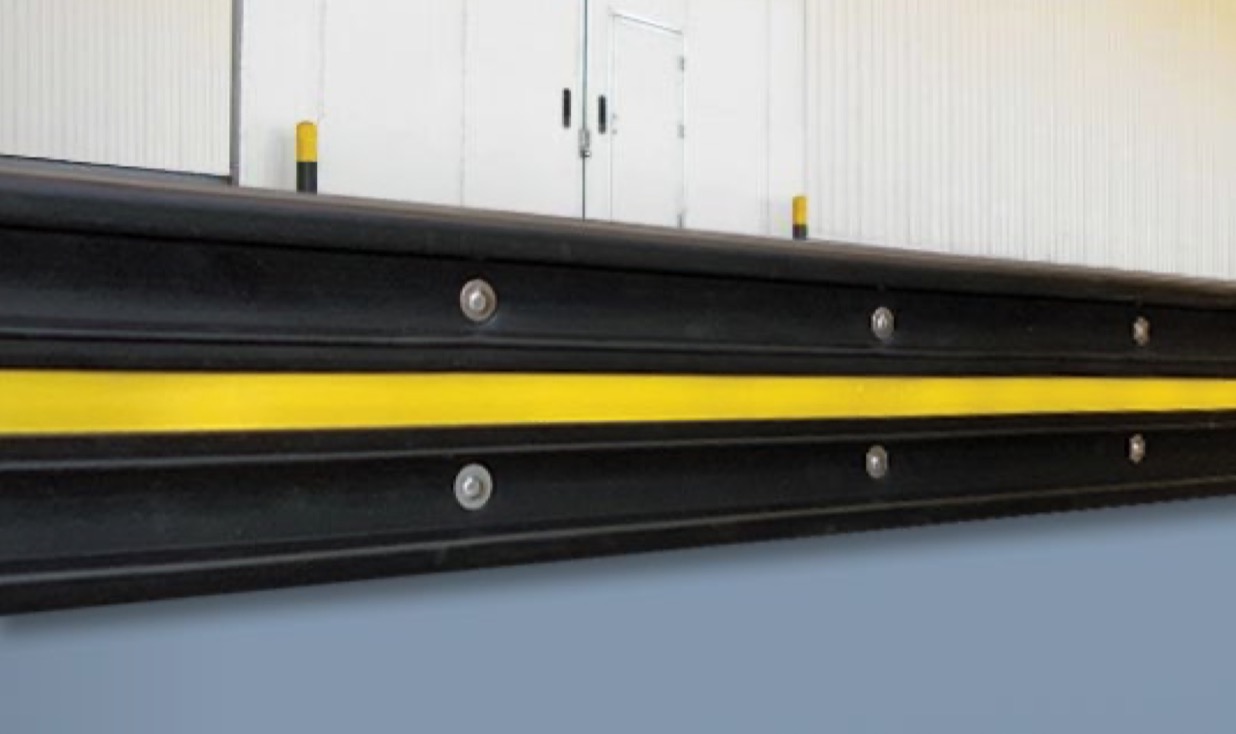
The screw head is concealed in the recessed grooves, stopping any accidental damage to property or vehicles. This range of buffers can be fixed horizontally or vertically along walls, round columns and Ramp areas. The wall buffers can be fitted to many surfaces: bricks, plaster, steel and concrete.
Designed to absorb impact damage in loading bays, service areas and car parks, the solid rubber guards are fixed at a distance of 500 mm to accommodate the anchor bolts and reduce the risk of accidental damage. We can supply the ‘E’ guards cut to the exact length to suit your site requirements.
Type A
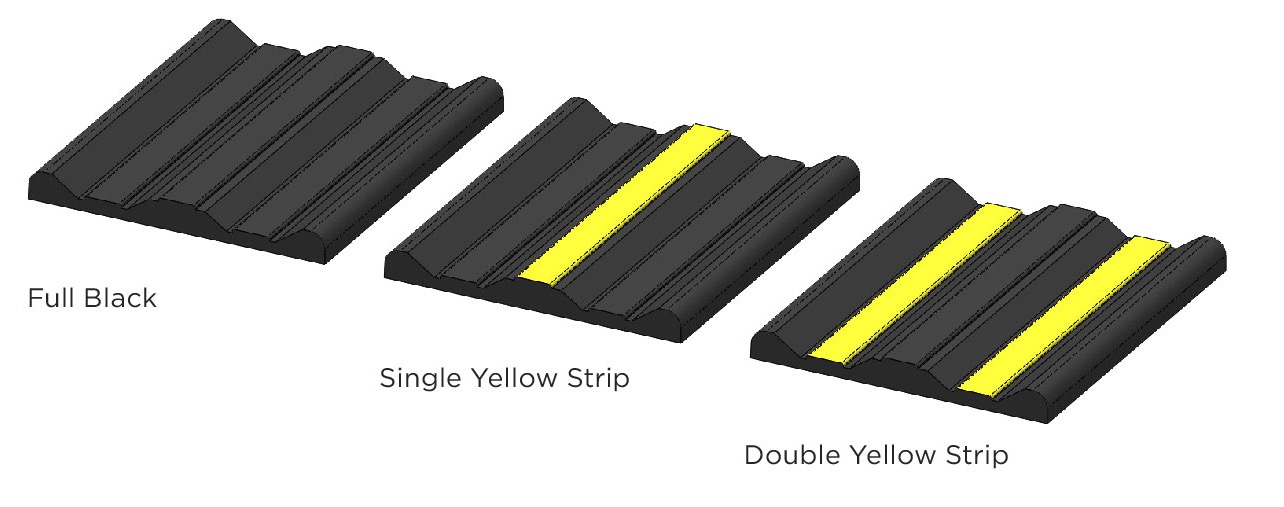
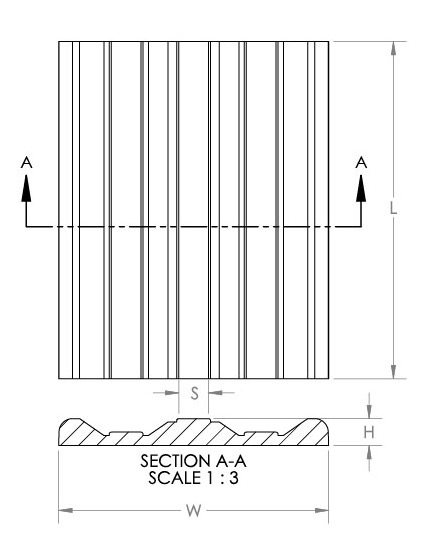
| Code | Width (mm) | Thickness (mm) |
|---|
| RWA20020 | 200 | 20 |
| RWA20025 | 200 | 25 |
| RWA20030 | 200 | 30 |
Type A
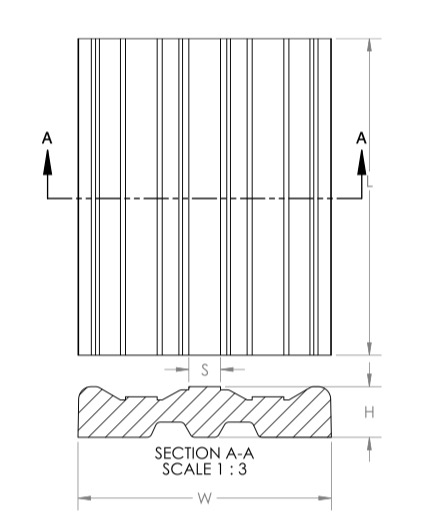
| Code | Width (mm) | Thickness (mm) |
|---|
| RWB20040 | 200 | 40 |
| RWB20045 | 200 | 45 |
| RWB20050 | 200 | 50 |
Wall Guards: Shielding Interior and Exterior Surfaces from Impact Damage
Flat wall surfaces in commercial buildings absorb constant punishment. Forklift masts gouge warehouse walls. Vehicle doors swing into car park surfaces. Trolleys scrape corridors in hospitals and retail stores. Wall guards provide a durable barrier between everyday activity and the wall surface, preserving structural integrity and appearance.
What Are Wall Guards?
Wall guards are protective strips, panels, or rails mounted horizontally along wall surfaces at points of likely impact. A wall bumper guard typically projects from the surface to absorb and deflect contact. Wall guard strips offer a lower profile for lighter-duty environments. Materials include moulded rubber, extruded PVC, foam-backed profiles, and steel-reinforced composite systems.
Applications
Car park operators are among the largest users, installing rubber wall guards along drive aisles and near columns to prevent vehicle paint-to-concrete contact. Warehouse managers fit heavy-duty wall guards at forklift operating height to protect block walls and plasterboard partitions. Facilities managers in hospitals, hotels, and schools use wall guard strips along corridors and service routes to minimise trolley and bed damage.
Key Benefits
Wall guards significantly extend the time between repainting or replastering cycles. Rubber wall guards external variants protect against weather as well as impact, making them suitable for covered loading bays and open-sided car parks. High-visibility options enhance spatial awareness, and the ease of replacement means damaged sections can be swapped without a full refit.
Buying Considerations
Specify the impact level: foam-backed profiles suit trolley corridors, while solid rubber is necessary for forklift zones. Consider the mounting surface – adhesive works on smooth block or render, but mechanical fixings are essential on rough brick or external walls. For car parks, choose UV-stable materials that will not degrade in sunlight. Order slightly more than measured – wall guards often need trimming around services and fire equipment.