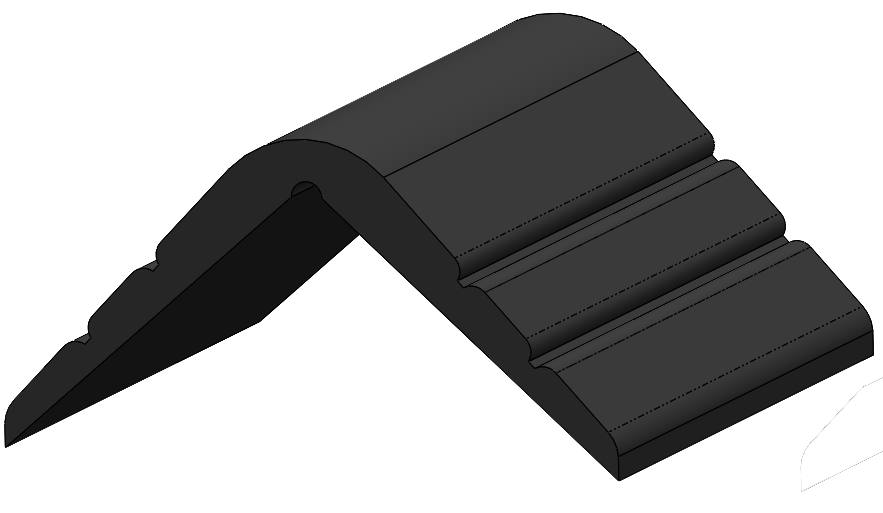
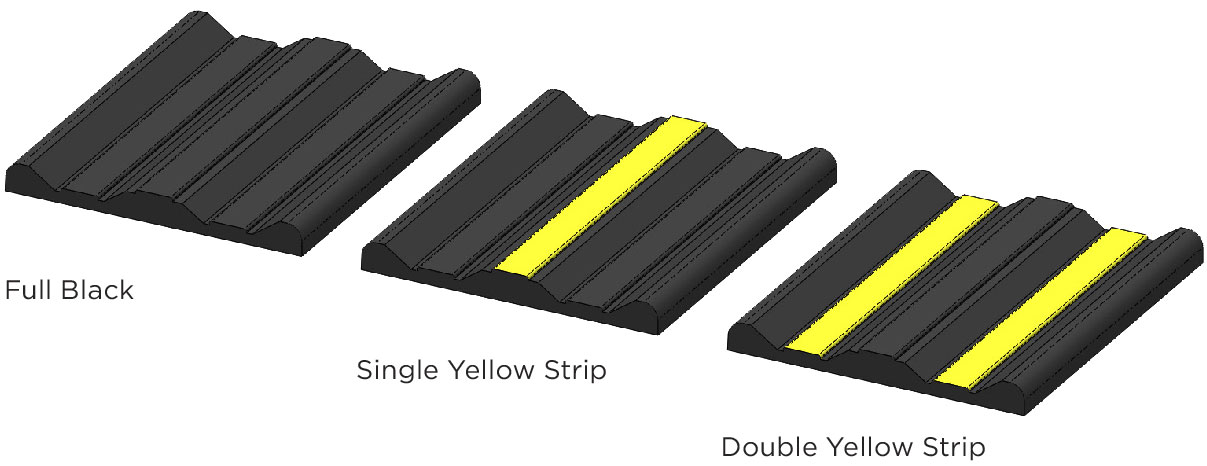
Corner guards are designed to give drivers the maximum visibility using black and yellow stripes, the correct hazard warning colours. The solid rubber buffer’s wrap-around design protects your property corners, columns and entrances that are exposed to vehicle and warehouse traffic. The corners guards can be securely fitted to concrete or brickwork, plain or plastered.
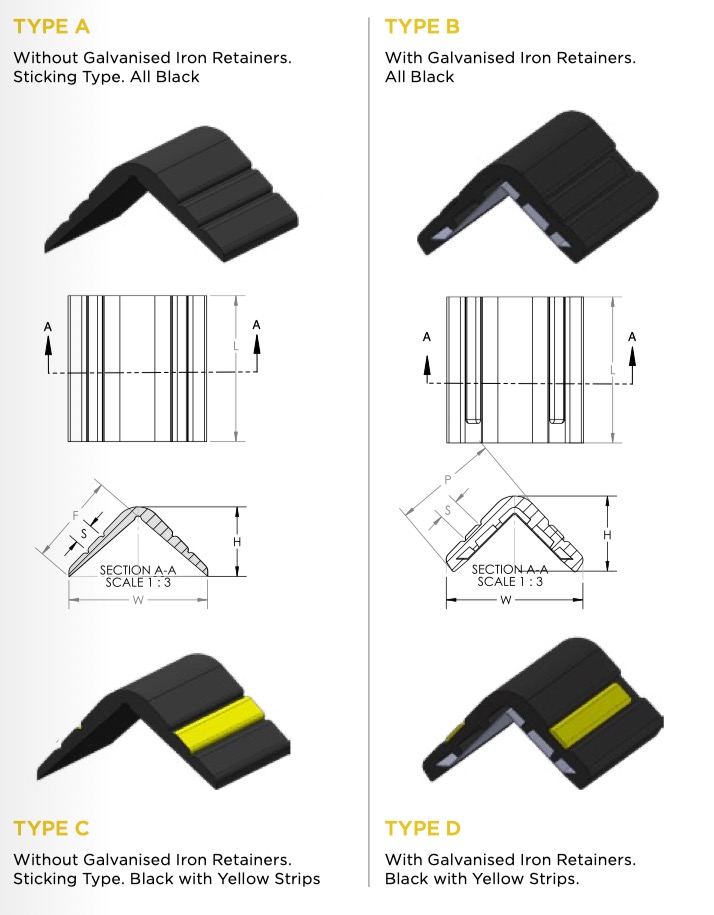
The product is available in the following wing sizes:
- 55mm x 55mm
- 65mm x 65mm
- 75mm x 75mm
- 90mm x 90mm
- 100mm x 100mm
- 120mm x 120mm
The products is available in the following standard lengths:
Installation
With metal backup sheet: Fix the metal backup plate on the wall by drilling 6 holes in a ‘Z’ format (Diagonally opposite). Fasten with GI screw and rawl plug M6 x 40mm. Slide the rubber profile over the fixed metal sheet to complete the fixing process.
Without metal backup sheet: Fix using a combination of epoxy adhesive and mechanical fasteners (GI flat screw ) size between 4-6 mm as per desired lengths.
Corner Guards: Protecting Vulnerable Edges Across Commercial Buildings
Exposed corners and edges are among the most damaged surfaces in any commercial building. From forklift traffic in warehouses to trolley movements in hospitals, corners bear the brunt of daily wear and impact. Wall corner guards offer a cost-effective way to prevent this damage and maintain a professional appearance.
What Are Corner Guards?
Corner guards are protective profiles fitted over the external corners of walls, columns, and structural edges. Available in rubber, polyurethane, stainless steel, and PVC, they range from slim, self-adhesive strips for light-duty environments to heavy rubber corner guards designed for industrial settings. Corner guards for walls come in a variety of lengths and can typically be cut to size on site.
Applications
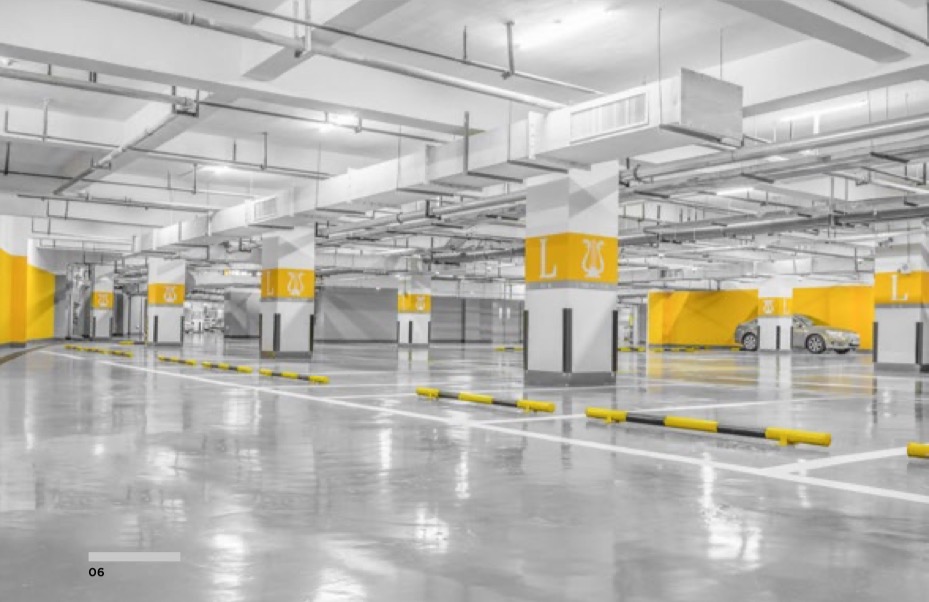
Facilities managers use them extensively in hospitals, schools, office lobbies, and retail environments where trolleys, beds, and foot traffic cause cumulative damage. Warehouse managers install heavier-duty rubber corner guards on racking end frames and structural columns to protect against forklift impact. Car park operators fit high-visibility corner protection guards on pillars to reduce vehicle scrapes and damage claims.
Key Benefits
Corner guards eliminate repetitive repair costs at damage hotspots. Self-adhesive options allow installation in minutes without drilling. High-visibility colours improve spatial awareness, reducing collisions in the first place. Stainless steel variants suit hygiene-sensitive environments like food processing and healthcare.
Buying Considerations
Match the material to the environment: rubber corner guards for industrial settings, PVC or stainless steel for healthcare, high-visibility polyurethane for car parks. Check the fixing method – self-adhesive suits smooth, clean surfaces; bolt-down is more reliable on rough or painted walls. Confirm the profile fits your corner angle, as not all buildings have exact 90-degree corners. For high-impact zones, choose thicker profiles with energy-absorbing properties.